
- Home
- Healthcare
- IoT Medical Devices Market
IoT Medical Devices Market Report- Global Strategic Analysis, Size, Share, Trend, and Forecast (2025-2035)

Market Overview
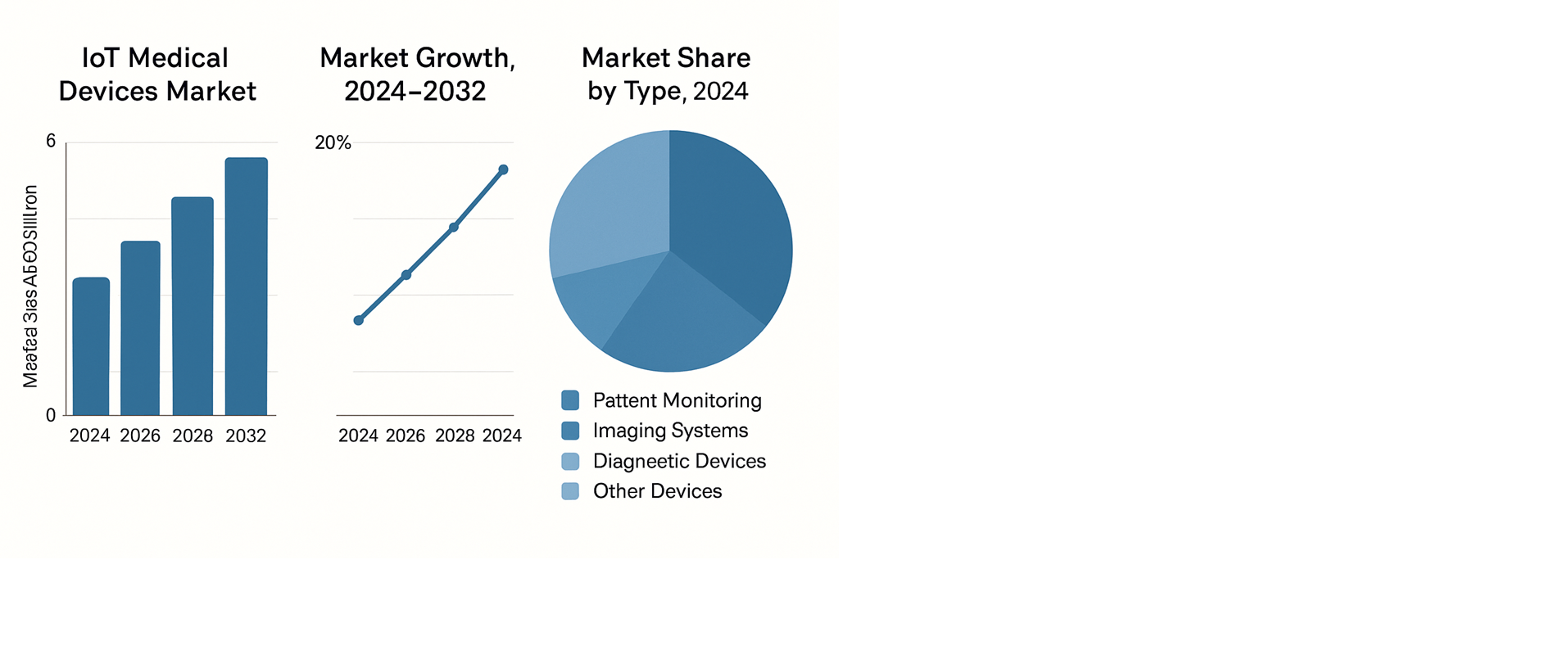
The global Internet of Medical Things (IoMT) market is projected to grow at a Compound Annual Growth Rate (CAGR) of 18.5% from 2025 to 2035, reaching a market value of USD 338.93 billion by 2035. The market's growth is fueled by the increasing integration of connected devices in healthcare, enabling real-time patient monitoring, improved diagnostics, and enhanced operational efficiencies.
Market Size and Share
- Market Size: The market is expected to expand significantly due to the rising adoption of IoT-enabled medical devices and the shift toward patient-centric care models.
- Market Share by Component (2024, estimated):
- Medical Devices (Wearable, Stationary, Implantable): 44%
- Systems & Software: 35%
- Connectivity Technology: 15%
- Services: 6%
Trends
- Rise in Remote Patient Monitoring: The growing demand for telehealth and remote monitoring solutions, accelerated by the COVID-19 pandemic, drives adoption of IoMT devices like smart wearables and sensors.
- Advancements in Connectivity: Innovations in 5G, Wi-Fi, and Low-Power Wide-Area Networks (LPWAN) enhance real-time data transmission and device integration.
- AI and Machine Learning Integration: AI-powered analytics in IoMT devices enable predictive diagnostics and personalized treatment plans, improving patient outcomes.
- Blockchain for Data Security: Blockchain technology is increasingly used to secure sensitive patient data, addressing privacy concerns.
- Wearable Technology Growth: Increased adoption of wearable devices for fitness tracking and chronic disease management boosts market expansion.
Growth Drivers
- Rising Prevalence of Chronic Diseases: The global increase in conditions like diabetes, cardiovascular diseases, and respiratory disorders fuels demand for continuous monitoring via IoMT devices. The WHO estimates 41 million annual deaths from non-communicable diseases, driving IoMT adoption.
- Aging Population: The global population aged 60+ is projected to reach 2.1 billion by 2050, increasing the need for remote monitoring and IoMT solutions.
- Government Initiatives: Policies promoting digital health, such as India’s 2022 digital healthcare projects, support IoMT adoption through funding and infrastructure development.
- Technological Advancements: Innovations in high-speed networking (e.g., 5G) and AI-driven analytics enhance device performance and data processing capabilities.
- Demand for Cost-Effective Care: IoMT reduces healthcare costs by minimizing hospital readmissions and enabling proactive care, aligning with value-based care models.
Key Players
Key companies in the IoMT market include:
- Medtronic plc: Leader in IoT-enabled devices for chronic disease management, e.g., remote glucose monitors.
- Koninklijke Philips N.V.: Innovates in wearable and telehealth solutions, focusing on patient monitoring.
- GE Healthcare: Specializes in connected imaging and diagnostic equipment.
- Cisco Systems, Inc.: Provides robust connectivity solutions for IoMT infrastructure.
- IBM Corporation: Offers AI and cloud-based platforms for healthcare data analytics.
- Microsoft Corporation: Develops IoMT software for secure data integration and analytics.
- SAP SE: Focuses on enterprise-level IoMT software for hospital management.
- Qualcomm Incorporated: Innovates in 5G and connectivity technologies for medical devices.
- Honeywell International Inc.: Provides IoT sensors for hospital asset tracking and patient monitoring.
- Boston Scientific Corporation: Specializes in IoT-enabled implantable devices like pacemakers.
These companies drive innovation through R&D, strategic partnerships (e.g., Microsoft-ZEISS collaboration in 2020), and product launches like Medtronic’s 2024 remote monitoring platform.
Challenges
- Data Security and Privacy: Cybersecurity risks, including ransomware attacks, threaten patient data, requiring robust encryption and compliance measures.
- High Implementation Costs: Initial setup costs for IoMT infrastructure, including 5G-enabled devices, can be prohibitive for smaller healthcare providers.
- Regulatory Compliance: Navigating complex regulations (e.g., FDA, HIPAA) delays product launches and increases costs.
- Interoperability Issues: Lack of standardized protocols for IoMT devices hinders seamless integration across healthcare systems.
Strategic Analysis
- Innovation Focus: Companies are investing in AI, 5G, and blockchain to enhance IoMT functionality and security. For example, GE Healthcare’s 2025 partnership with Nuffield Health deployed AI-enabled diagnostics.
- Market Expansion: Key players are targeting emerging markets with scalable, cloud-based IoMT solutions to address cost barriers.
- Collaborations: Strategic alliances, such as Siemens’ 2024 deployment of 7,000 IoT sensors in Swiss hospitals, enhance market penetration.
- Consumer-Centric Solutions: Increased focus on patient engagement through user-friendly wearables and mobile apps drives adoption.
Conclusion
- The IoMT market is poised for robust growth through 2035, driven by technological advancements, rising chronic disease prevalence, and supportive government policies. Key players are leveraging innovation and partnerships to address challenges like cybersecurity and regulatory compliance, ensuring sustained market expansion and improved patient outcomes.
Table of Content
1. Market Overview
1.1 Research Methodology
1.2 Definitions and Scope
2.Market - Executive Summary
2.1 Market Opportunity
2.2 Key Trends by Product Segments
2.3 Key Trends by Geography
3. IoT Medical Devices Market Landscape
3.1 Comparative analysis
3.1.1 Product Benchmarking - Top 10 companies
3.1.2 Top 5 Financials Analysis
3.1.3 Market Value split by Top 10 companies
3.1.4 Pricing Analysis
4. Market Forces
4.1 Market Drivers
4.2 Market Constraints
4.3 Market Challenges
4.4 Porter’s Five Forces
4.4.1 Bargaining Power of Suppliers
4.4.2 Bargaining Power of Consumers
4.4.3 Threat of New Entrants
4.4.4 Threat of Substitute Products and Services
4.4.5 Degree of Competition
5. IoT Medical Devices Market - Strategic Analysis
5.1 Value Chain
5.2 Opportunity
5.3 Patent Analysis
6. Global IoT Medical Devices Market Outlook
6.1 Global IoT Medical Devices Market Outlook, by Type, 2025-2035
6.2 Global IoT Medical Devices Market Outlook, by Application, 2025-2035
7. Asia Pacific IoT Medical Devices Market Outlook
7.1 Key Snapshot
7.2 Asia Pacific IoT Medical Devices Market Outlook, by Type, 2025-2035
7.3 Asia Pacific IoT Medical Devices Market Outlook, by Application, 2025-2035
7.4 Asia Pacific IoT Medical Devices Market Outlook, by Country, 2025-2035
8. North America IoT Medical Devices Market Outlook
8.1 Key Snapshot
8.2 North America IoT Medical Devices Market Outlook, by Type, 2025-2035
8.3 North America IoT Medical Devices Market Outlook, by Application, 2025-2035
8.4 North America IoT Medical Devices Market Outlook, by Country, 2025-2035
9. Europe IoT Medical Devices Market Outlook
9.1 Key Snapshot
9.2 Europe IoT Medical Devices Market Outlook, by Type, 2025-2035
9.3 Europe IoT Medical Devices Market Outlook, by Application, 2025-2035
9.4 Europe IoT Medical Devices Market Outlook, by Country, 2025-2035
10. Latin America IoT Medical Devices Market Outlook
10.1 Key Snapshot
10.2 Latin America IoT Medical Devices Market Outlook, by Type, 2025-2035
10.3 Latin America IoT Medical Devices Market Outlook, by Application, 2025-2035
10.4 Latin America IoT Medical Devices Market Outlook, by Country, 2025-2035
11. Middle East and Africa IoT Medical Devices Market Outlook
11.1 Key Snapshot
11.2 Middle East and Africa IoT Medical Devices Market Outlook, by Type, 2025-2035
11.3 Middle East and Africa IoT Medical Devices Market Outlook, by Application, 2025-2035
11.4 Middle East and Africa IoT Medical Devices Market Outlook, by Country, 2025-2035
12. IoT Medical Devices Market -Entropy
12.1 New Product Launches
12.2 M&A, Collaborations, JVs, and Partnerships
13. IoT Medical Devices Market Company Analysis
13.1 Market Share Analysis, Financial Analysis, Product Synopsis, Recent News and Developments
13.2 Company 1
13.3 Company 2
13.4 Company 3
13.5 Company 4
13.6 Company 5
13.7 Company 6
13.8 Company 7
13.9 Company 8
13.10 Company 9
13.11 Company 10
Related Reports
-
Laser Dentistry Devices Market Report- Global Strategic Analysis, Size, Share, Trend, and Forecast (2025-2035)
- Published: July, 2025
- Price: $2950
- Sample Request
-
Meditation Market Report- Global Strategic Analysis, Size, Share, Trend, and Forecast (2025-2035)
- Published: July, 2025
- Price: $2950
- Sample Request
-
Point-of-Care Biopsy Market Report- Global Strategic Analysis, Size, Share, Trend, and Forecast (2025-2035)
- Published: July, 2025
- Price: $2950
- Sample Request
-
Pediatric Patient Handling Equipment Market Report- Global Strategic Analysis, Size, Share, Trend, and Forecast (2025-2035)
- Published: July, 2025
- Price: $2950
- Sample Request